

Cochlear implant assessments
Hearing loss can be managed in different ways, depending on how severe it is and its cause.
If you or a loved one has severe to profound hearing loss that is not helped enough by hearing aids, your doctor may choose to refer you to the Statewide Tertiary Adult Audiology Service for a cochlear implant assessment. This small electronic device is placed in your inner ear and improves your hearing by triggering your hearing nerve to send sound signals to your brain. Learn more about a cochlear implant.
Paediatric services are provided at Fiona Stanley Hospital and Fremantle Hospital. These services are also available to paediatric patients living within the SMHS catchment (PDF 2MB) at Fiona Stanley Hospital and Fremantle Hospital.
Before your assessment
Visit your hearing aid audiologist and have your hearing aids serviced and check they are working the best they can.
Please bring your hearing aids and the results of any previous hearing tests.
You are also encouraged to bring a family member or close communication partner for support.
At your assessment
The assessment will determine if a cochlear implant is a safe and beneficial treatment to improve your communication and quality of life.
An implant audiologist will guide you through a number of tests to assess your:
- hearing
- hearing aids performance
- communication needs
- lifestyle.
The tests are safe and painless. Please note you may need to attend more than one appointment to complete all the tests.
Your assessment may include some or all of the following steps.
Review of your medical history
We will talk about your hearing journey, daily communication challenges and what you hope to achieve with an implant.
We will also record information about your general health and previous hearing tests.
Full hearing test
We will test your hearing – both with and without your hearing aids – to measure what you can and cannot hear while wearing your hearing aids.
Hearing aid assessment
We will check:
- if your current hearing aids are working the best they can
- how well you understand speech while using your hearing aids, both in quiet and background noise.
The results will help show if a cochlear implant could help you hear better than just using your hearing aids.
Counselling and setting expectations
We’ll explain and discuss:
- how a cochlear implant works
- what happens on the day the cochlear implant is turned on (activated)
- all the hearing exercises (rehabilitation) you will need to complete once the implant is activated
- what outcomes you can and cannot expect to achieve with a hearing implant
- the time you will need to dedicate to you hearing exercises.
This is also a great time for you to ask any questions you have.
Quality of life and communication questionnaires
We may ask you to complete questionnaires about how your hearing loss affects your daily life, such as:
- communicating at home, work and social settings
- your emotional wellbeing.
These help us understand the personal impact of your hearing loss and set meaningful goals for improvement.
Balance function testing
If our initial assessment shows you may be suitable for a cochlear implant, you will be referred for a balance function assessment.
Medical and imaging tests
Our team works closely with the ear, nose and throat (ENT) team.
If you have not already been assessed by the ENT team, we will refer you for an appointment.
After your assessment
Once all your assessments are complete, the cochlear implant team will meet with you to discuss your results.
A follow-up appointment will also be made. This gives your time to consider their recommendation and return to discuss it further with your team.
If a cochlear implant is appropriate for you and you choose to proceed, the medical and audiology team will guide you through the next steps.
Learn more about a cochlear implant.
Referral information
You will need a referral from your general practitioner (GP) or specialist to access this service.

Your appointment letter will note the location of your outpatient appointment.
Read how to manage your outpatient appointment using the Manage my Care app.
Fiona Stanley Hospital patients
Call the Fiona Stanley Helpdesk on 6152 2222 and ask for your specific clinic or audiologist.
Outpatient clinics are located on the ground floor of the main hospital building, off the main concourse. The main entrance to the hospital is accessed off Robin Warren Drive – view the Fiona Stanley Hospital map (PDF 1MB).
Fremantle Hospital patients
Call the Fremantle Hospital switchboard on 9431 3333 and ask for your specific clinic or audiologist.
Please go to B Block Level 4, Fremantle Hospital, Alma St Fremantle – view the Fremantle Hospital map (PDF 675KB).
Royal Perth Hospital patients
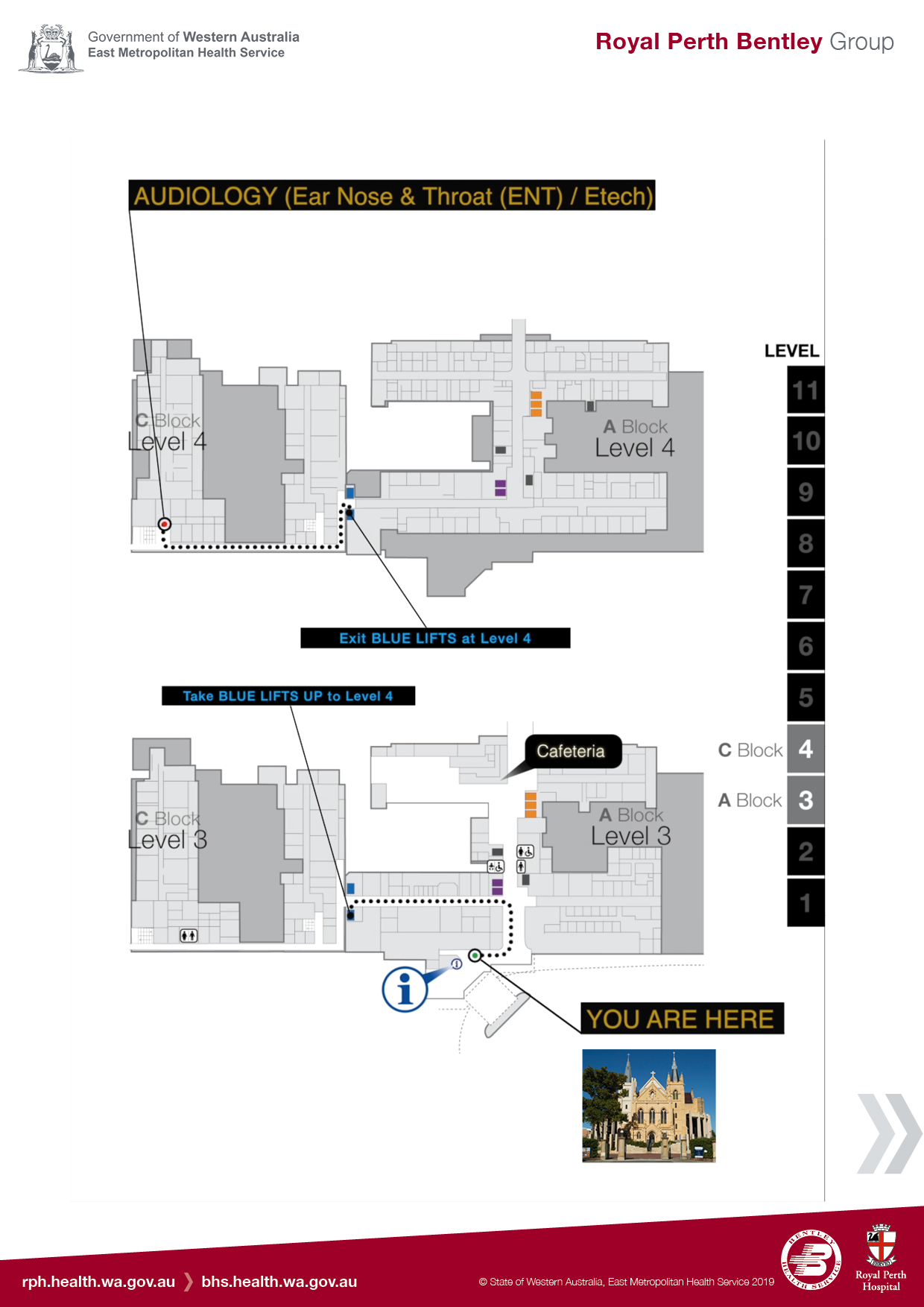
Call Royal Perth Hospital switchboard on 9224 2244 and ask for your specific clinic.
The Outpatient Audiology and ENT Department is located Level 4, Nicholay Block – see the Royal Perth Hospital map (external site).
Sir Charles Gairdner Hospital patients
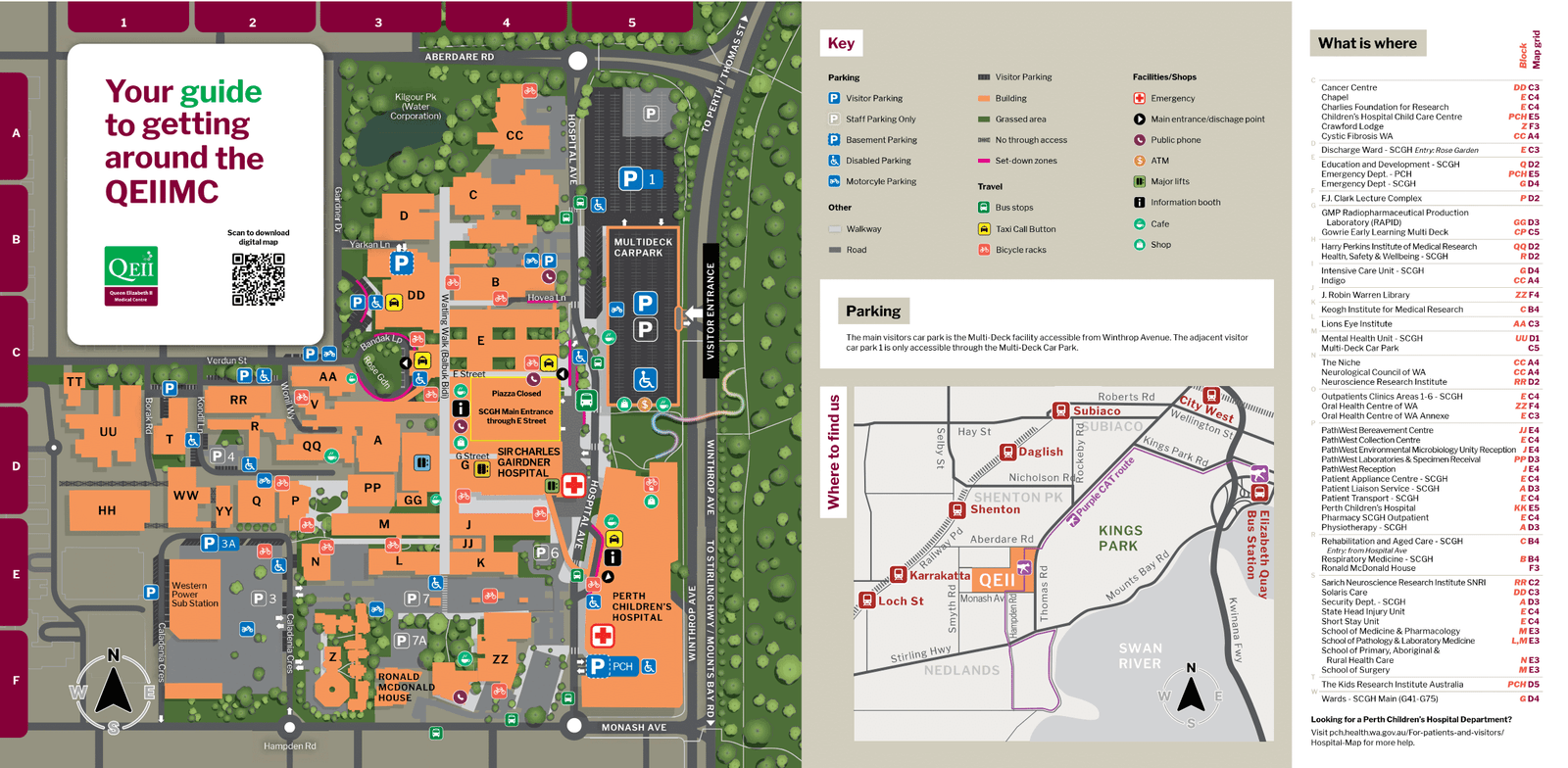
Call Sir Charles Gairdner Hospital switchboard on 6457 3333 and ask for your specific clinic. The Outpatient Audiology and ENT Department is located on E Block, Ground Floor, Area 2 – see the Sir Charles Gairdner Hospital map (external site).
Opening hours
8:00am to 4:00pm, Monday to Friday.