

Balance function assessments
Some dizziness and balance problems come from problems with your inner ear or its nerves. This is known as your vestibular (balance) system.
To help identify the cause of your dizziness, vertigo or balance problems, you may be referred to the Statewide Tertiary Adult Audiology Service for a balance function assessment.
Paediatric services are provided at Fiona Stanley Hospital and Fremantle Hospital.
These services are also available to paediatric patients living within the SMHS catchment (PDF 2MB) at Fiona Stanley Hospital and Fremantle Hospital.
Before your assessment
To avoid your assessment being cancelled, please:
- avoid caffeine, alcohol and certain medications as advised by your doctor for 24 to 48 hours before testing
- don’t wear eye makeup for tests involving eye recording – this information will be in your appointment letter
- wear comfortable clothing.
Small sensors may need to be taped to your skin for some tests. If you are allergic to sticking plasters/tape, please let your audiologist know.
Please arrange for someone to drive you home after the assessment as you may experience some mild dizziness. After that you can resume normal activities.
At your assessment
The full assessment to check how your balance system is working usually takes 90 to 120 minutes.
Your assessment may include some or all of the following tests. The tests are safe and painless, although some motions or sounds may cause temporary and mild dizziness.
A balance audiologist (an expert in hearing loss and balance disorders) will guide you through each step.
Videonystagmography
Videonystagmography (VNG) checks your balance function by measuring eye movements you can’t control. If these movements happen when they shouldn’t, you may have a problem in your inner ear.
While wearing goggles which record your eye movements, we will ask you to follow a moving light with your eyes. At times, your audiologist may need to gently change your head position.
Warm and cool air (or water) may be also placed in your ear canal for about a minute. This is to investigate if your inner ears are working together or if one is working more than the other. Please note this may briefly cause mild dizziness.
Video head impulse test
The video head impulse test (vHIT) checks how well your eyes can stay focused during head motion
For this test, your audiologist will gently and quickly turn your head while you wear lightweight goggles that record your eye movements.
Vestibular evoked myogenic potentials
For a vestibular evoked myogenic potentials (VEMP) test you will either sit or lie down. As you hear clicking sounds through earphones, sensors placed on your neck and eye muscles will record any tiny muscle responses you make.
If you are allergic to sticking plasters, please let your audiologist know.
Rotary chair test
This test measures how well your eyes and inner ear work together to help your balance.
You will sit in a dark room on a slow-moving motorised chair – it will feel like spinning gently in an office chair – while small sensors monitor your eye movements. This test is only performed if your audiologist feels it is necessary.
After the assessment
After a detailed analysis, your results will be sent to your referring doctor.
Find out more
Find information on dizziness (external site) and vertigo (external site).
Visit the following websites:
- American Academy of Audiology (external site) – search for vestibular assessment or balance function testing.
- American Balance Society (external site) for information on balance disorders.
- Johns Hopkins Medicine (external site) – search balance testing or vestibular assessment.
- Mayo Clinic (external site) – search for balance testing, ENG, VNG or VEMP.
Referral information
You will need a referral from your general practitioner (GP) or specialist to access this service.

Your appointment letter will note the location of your outpatient appointment.
Read how to manage your outpatient appointment using the Manage my Care app.
Fiona Stanley Hospital patients
Call the Fiona Stanley Helpdesk on 6152 2222 and ask for your specific clinic or audiologist.
Outpatient clinics are located on the ground floor of the main hospital building, off the main concourse. The main entrance to the hospital is accessed off Robin Warren Drive – view the Fiona Stanley Hospital map (PDF 1MB).
Fremantle Hospital patients
Call the Fremantle Hospital switchboard on 9431 3333 and ask for your specific clinic or audiologist.
Please go to B Block Level 4, Fremantle Hospital, Alma St Fremantle – view the Fremantle Hospital map (PDF 675KB).
Royal Perth Hospital patients
Call Royal Perth Hospital switchboard on 9224 2244 and ask for your specific clinic.
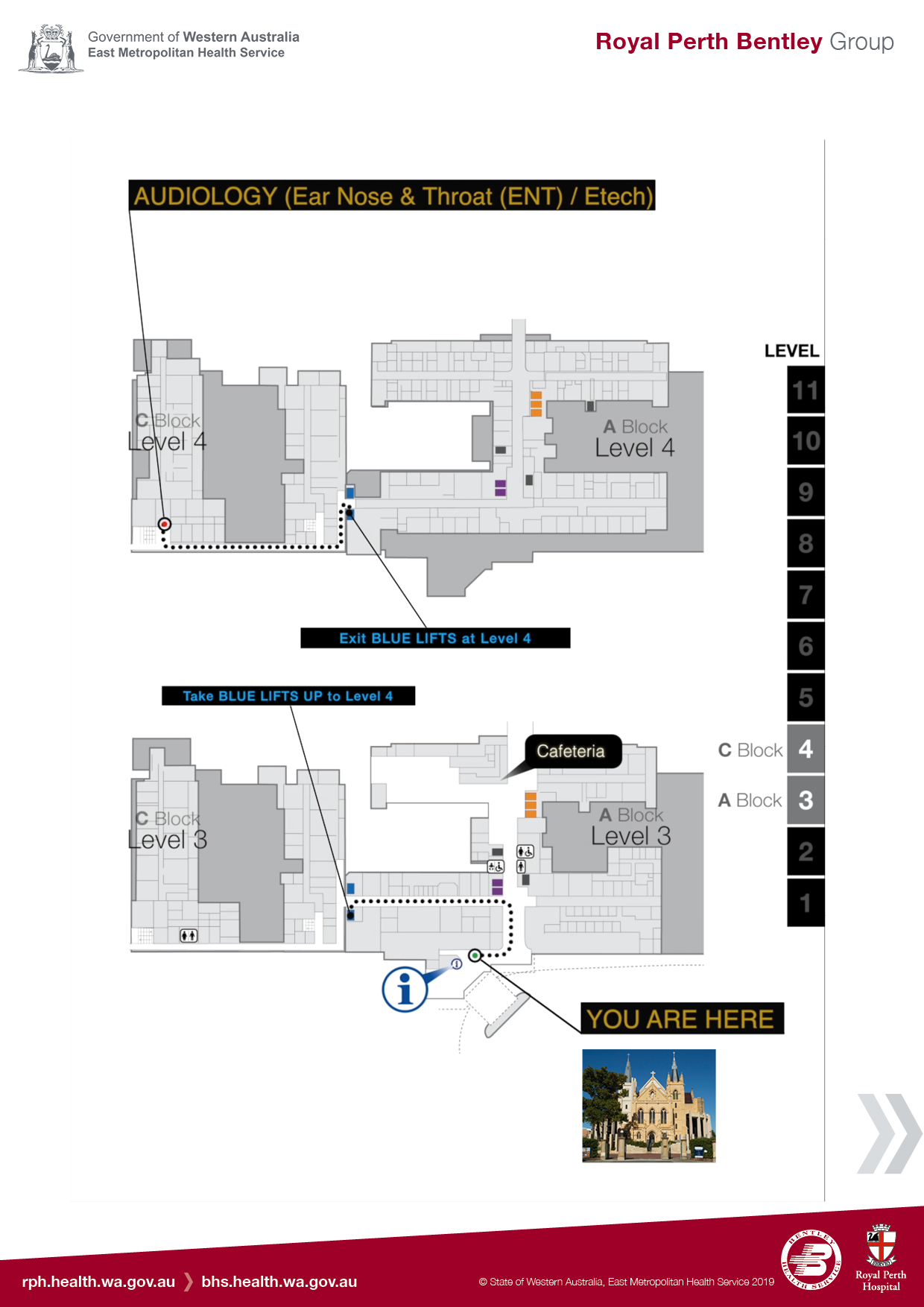
The Outpatient Audiology and ENT Department is located Level 4, Nicholay Block – see the Royal Perth Hospital map (external site).
Sir Charles Gairdner Hospital patients
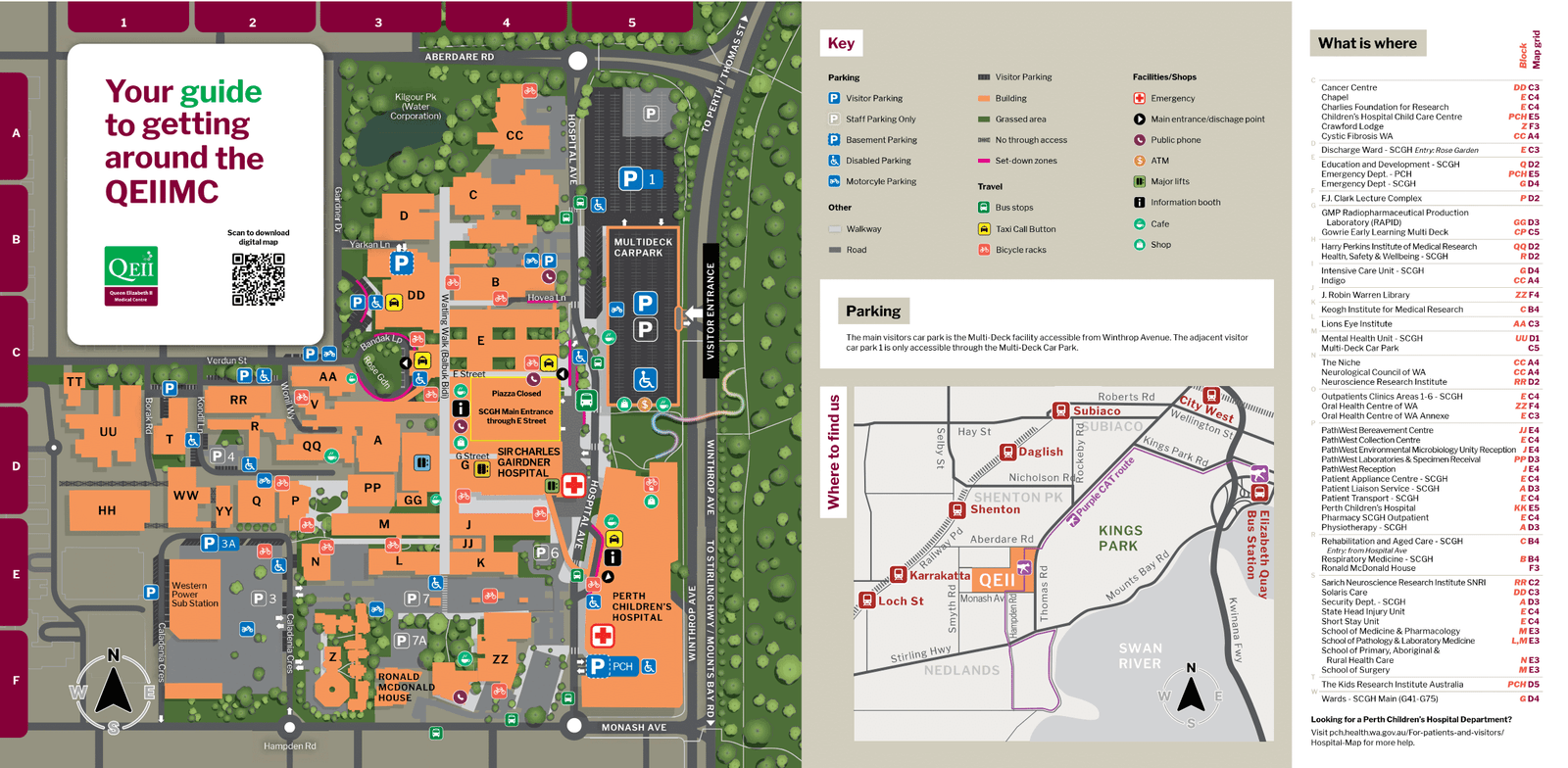
Call Sir Charles Gairdner Hospital switchboard on 6457 3333 and ask for your specific clinic. The Outpatient Audiology and ENT Department is located on E Block, Ground Floor, Area 2 – see the Sir Charles Gairdner Hospital map (external site).
Opening hours
8:00am to 4:00pm, Monday to Friday.