

Tinnitus assessments
People with tinnitus hear ringing and other noises in their ears when no sound is being made. Read more about tinnitus (external site).
If you hear ringing, buzzing or another sound in your ears that isn’t coming from an external source, you may be referred to the Statewide Tertiary Adult Audiology Service for a tinnitus assessment.
Paediatric services are provided at Fiona Stanley Hospital and Fremantle Hospital. These services are also available to paediatric patients living within the SMHS catchment (PDF 2MB) at Fiona Stanley Hospital and Fremantle Hospital.
Before your appointment
To help us make the most of your appointment, please:
- bring a list of any medications and supplements you take
- think about how you would describe your tinnitus – is it a ringing, buzzing or a high/low pitch
- think about what makes your tinnitus better or worse, such as quiet settings, stress, drinking caffeine, etc.
At your assessment
The full assessment to identify possible causes and guide treatment options usually takes 60 minutes.
The tests are painless and an audiologist will guide you through each step.
Your assessment may include some or all of the following steps.
Review of your medical history
At your first appointment, you will talk with an audiologist (an expert in hearing loss and balance disorders) about your tinnitus. This includes:
- what it sounds like
- when it started
- how often you hear it
- how it affects your daily life.
We will also review your medical and hearing health history.
Full hearing test
You will use headphones to listen to tones and words and respond when you hear them. This tells us about your hearing sensitivity and helps determine if you have any hearing loss.
Tinnitus pitch and loudness matching
Using sounds played through headphones, we’ll help match the pitch and loudness of your tinnitus to an external sound. This helps us better understand what you’re hearing.
Tinnitus questionnaire
We may ask you to fill out a short questionnaire about how tinnitus impacts your:
- sleep
- concentration
- emotions
- overall quality of life.
Other possible tests
These may include:
- speech-in-noise testing, to check how well you understand speech in background noise
- loudness discomfort level testing, which identifies the softest volume level that is uncomfortable for you. This guides future hearing aid or sound therapy programming so it is safe and comfortable.
After your assessment
Your audiologist will review your results with you and explain what they mean.
Their goal is to help you better understand your tinnitus and develop a personalised plan to reduce its impact on your daily life.
If appropriate, they may discuss management options including:
- hearing aids with tinnitus therapy features
- sound therapy
- counselling and education
- relaxation and mindfulness strategies
- referrals to other specialists if needed.
Referral information
You will need a referral from your general practitioner (GP) or specialist to access this service.

Your appointment letter will note the location of your outpatient appointment.
Read how to manage your outpatient appointment using the Manage my Care app.
Fiona Stanley Hospital patients
Call the Fiona Stanley Helpdesk on 6152 2222 and ask for your specific clinic or audiologist.
Outpatient clinics are located on the ground floor of the main hospital building, off the main concourse. The main entrance to the hospital is accessed off Robin Warren Drive – view the Fiona Stanley Hospital map (PDF 1MB).
Fremantle Hospital patients
Call the Fremantle Hospital switchboard on 9431 3333 and ask for your specific clinic or audiologist.
Please go to B Block Level 4, Fremantle Hospital, Alma St Fremantle – view the Fremantle Hospital map (PDF 675KB).
Royal Perth Hospital patients
Call Royal Perth Hospital switchboard on 9224 2244 and ask for your specific clinic.
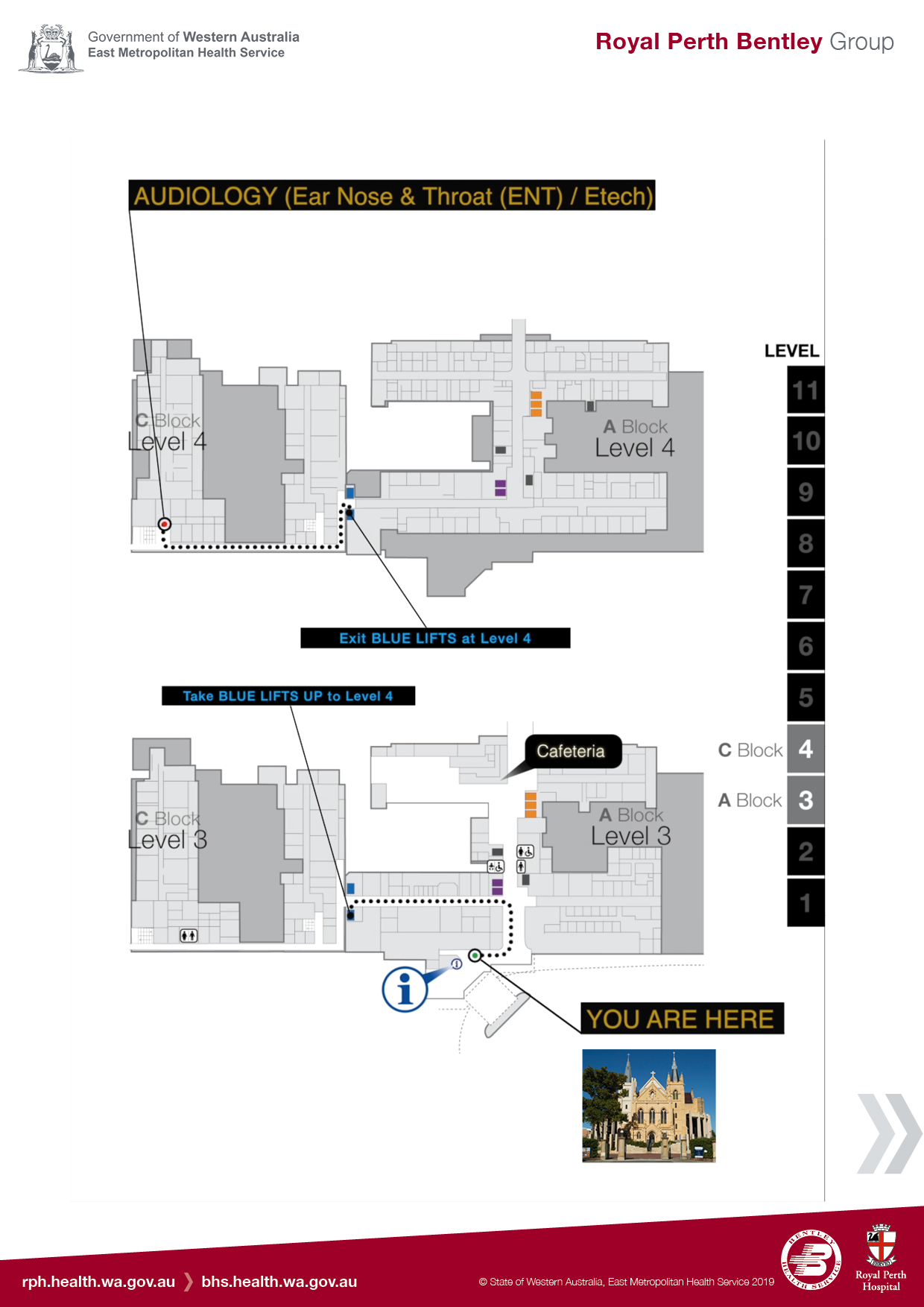
The Outpatient Audiology and ENT Department is located Level 4, Nicholay Block – see the Royal Perth Hospital map (external site).
Sir Charles Gairdner Hospital patients
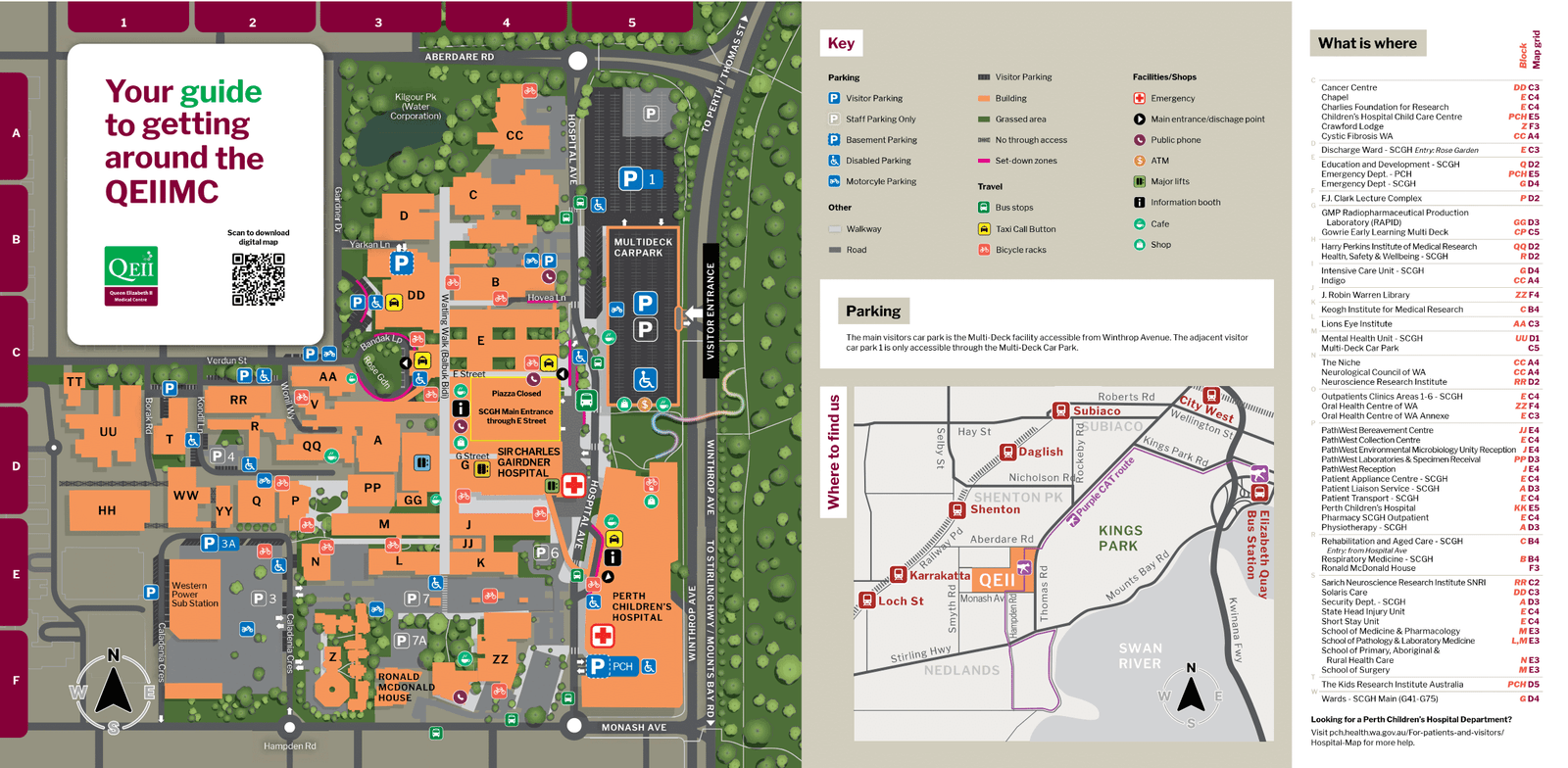
Call Sir Charles Gairdner Hospital switchboard on 6457 3333 and ask for your specific clinic. The Outpatient Audiology and ENT Department is located on E Block, Ground Floor, Area 2 – see the Sir Charles Gairdner Hospital map (external site).
Opening hours
8:00am to 4:00pm, Monday to Friday.