
• Skip to main content
  • Skip to navigation
  • Accessibility
  • Contact Us
Government of Western Australia Crest
Government of Western Australia
Government of Western Australia Crest

Additional Menu

  • Accessibility
  • Contact us
Go to WA Government search
  • For patients and visitors
    • Emergencies
    • Aishwarya's CARE Call
    • Coming to Fiona Stanley Hospital
      • Visiting our hospitals
      • Finding your way
      • Maps
      • Facilities
      • Parking and transport
    • Coming to Fremantle Hospital
      • Visiting our hospitals
      • Map of Fremantle Hospital
      • Facilities
      • Parking and transport
    • Coming to Cockburn Health
      • Visiting our hospitals
      • Parking and transport
      • Maps of Cockburn Health
    • Visiting our hospitals
    • Being a patient
      • Understanding your surgical journey
      • Your hospital admission
      • Understanding where you will receive care
      • During your hospital stay
      • Ordering patient meals
      • Elective surgery
      • Outpatients
      • Private patients
      • Treatment costs for overseas visitors and students
      • Going home from hospital
    • Support during your stay
      • Pastoral care
      • Peer support workers
      • Supporting Aboriginal patients and families
      • Supporting people with disability
    • Keeping you safe
      • Reduce your risk of falls – Be SAFER
      • Preventing pressure injuries
      • About good hand hygiene
      • Preventing healthcare associated infections
    • Managing your health care
      • Patient rights
      • Goals of patient care
      • Talk about 'What matters to you?'
      • MySay healthcare survey
    • Easy read resources
    • For families and carers
      • Pastoral care
      • Supporting carers
      • Supporting Aboriginal patients and families
      • Supporting patients with cognitive impairment
      • Understanding delirium
      • If you can't visit an older patient
      • The intensive care journey
      • After the loss of a loved one
    • Freedom of information
    • Feedback compliments and complaints
  • For health professionals
    • Information for GPs
      • SMHS GP Engage
    • Refer a patient
      • Service specific referrals
    • Library and Information Service
  • Our services
  • Our community
    • Volunteer with us
    • Consumer Advisory Council
    • 'Put it to the People' engagement platform
    • ED Consumer Advisory Group
    • Mental Health Consumer Advisory Group (Fremantle Hospital)
    • Pulse
  • Our research
  • Work with us
    • Career opportunities
      • Aboriginal workforce
      • Allied Health
      • Corporate non-clinical
      • Graduates
      • Medical
      • Mental health
      • Nursing and midwifery careers
    • Fellowships
      • Anaesthesia and Pain Medicine
      • Medical Imaging Fellowships
    • Living in WA
  • News
  • About us
    • About FSFHG
    • About South Metropolitan Health Service
    • Feedback, compliments, concerns and complaints
    • Conduct and standards
    • Contact us
    • Executive
    • Our vision and values
    • Our history
    • Our Aboriginal heritage
  1. Home
  2. News
  3. 2026
  4. 04
  5. 24
  6. Collaborative global-first study to assess long-term quality of life for burn patients

Collaborative global-first study to assess long-term quality of life for burn patients
Collaborative global-first study to assess long-term quality of life for burn patients

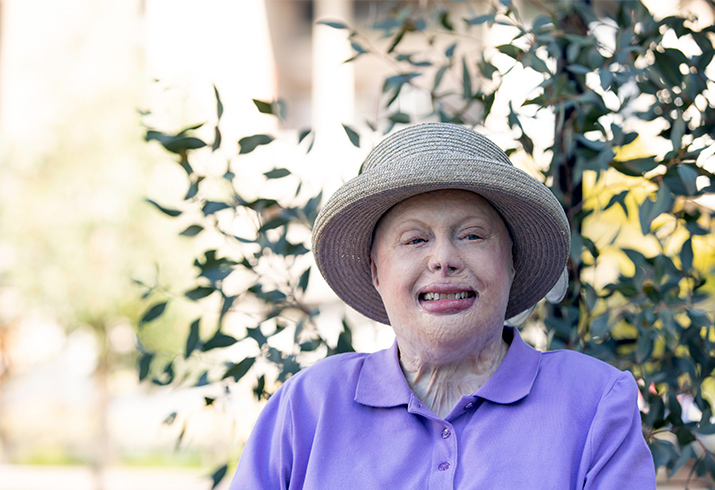
A woman with burn scars in her face sits in a garden setting Val Sloss, Dale’s first burns patient in 1998, has completed the survey
24/04/2026

A global-first study to assess the long-term impact of burns on patient quality of life in WA is being run as a collaboration between the State Adult Burn Unit at Fiona Stanley Hospital, Fiona Wood Foundation and The University of Notre Dame Australia.

Research Fellow and Physiotherapist, A/Prof Dale Edgar and team have launched the 'WA Ultralong Follow-up After Burn (ULFAB) Connect' study at the hospital, using surveys to measure past burn patients' quality of life.

“So far, the impact on a patient’s quality of life post-burn has been only explored in small samples with short-term follow up,” Dale said.

“Burn injury has chronic consequences well beyond the acute healing period, so this study hopes to achieve a better understanding of the longer-term impact of burn injury for patients in WA.”

“By connecting with patients who have been treated in primary care for burn injury, as well as past hospitalised burns patients, we aim to find out how long any impacts on quality of life endure after a burn injury, broken down by size of burn and grouped for patient factors.”

The current phase of the study, ULFAB Part 2 brings past patients back for assessment and collection of research data and biospecimens to enable analysis of their physical, psychological, and physiological results.

“Past burns patients can benefit from the study by having clinicians of the State Adult Burn Unit holistically assess their health status and offer screening and, or referral for specialist care or treatments, including scarring,” Dale said.

“Many of the patients who we hope to contact with may have never been offered contemporary treatment to improve their scars, but during these studies we can offer them assessment of their health, scarring and medical status.”

“This study will allow us to understand and respond to the challenges facing future patients with burn injuries, as well as their carers and families,” Dale said.

Val Sloss was Dale’s first patient in 1998. Val completed the survey and said the team were friendly and professional, the collection was pain-free, and it was well explained beforehand.

“The team at the Burns Unit has been there for me for nearly 30 years, and this is one way I can help now, so I’m always willing to help with research and support the Fiona Wood Foundation any way I can,” Val said.

If you are a current or past burn patient and would like to be involved in the study, please email Dale Edgar or complete the survey online (external site).

If you work in a GP, medical clinic or health service, please view this video of Professor Fiona Wood asking for your support.

This research has been funded by Fiona Wood Foundation, The University of Notre Dame Australia, and The University of Western Australia with support from South Metropolitan Health Service (SMHS).

The pilot for ULFAB Part 2 phase of the study has now commenced and is due for completion by the end of 2026.

Keep up to date with our news and achievements

Find out more on Facebook (external site) or LinkedIn (external site)

Previous Next
Last Updated: 24/04/2026
  • Facebook
  • LinkedIn

Footer menu

  • wa.gov.au
  • Copyright
  • Disclaimer
  • Privacy
  • Sitemap
  • Contact Us

Brought to you by the Department of Health, Western Australia

© Government of Western Australia 2018 to