
• Skip to main content
  • Skip to navigation
  • Accessibility
  • Contact Us
Government of Western Australia Crest
Government of Western Australia
Government of Western Australia Crest

Additional Menu

  • Accessibility
  • Contact us
Go to WA Government search
  • For patients and visitors
    • Emergencies
    • Aishwarya's CARE Call
    • Coming to Fiona Stanley Hospital
      • Visiting our hospitals
      • Finding your way
      • Maps
      • Facilities
      • Parking and transport
    • Coming to Fremantle Hospital
      • Visiting our hospitals
      • Map of Fremantle Hospital
      • Facilities
      • Parking and transport
    • Coming to Cockburn Health
      • Visiting our hospitals
      • Parking and transport
      • Maps of Cockburn Health
    • Visiting our hospitals
    • Being a patient
      • Understanding your surgical journey
      • Your hospital admission
      • Understanding where you will receive care
      • During your hospital stay
      • Ordering patient meals
      • Elective surgery
      • Outpatients
      • Private patients
      • Treatment costs for overseas visitors and students
      • Going home from hospital
    • Support during your stay
      • Pastoral care
      • Peer support workers
      • Supporting Aboriginal patients and families
      • Supporting people with disability
    • Keeping you safe
      • Reduce your risk of falls – Be SAFER
      • Preventing pressure injuries
      • About good hand hygiene
      • Preventing healthcare associated infections
    • Managing your health care
      • Patient rights
      • Goals of patient care
      • Talk about 'What matters to you?'
      • MySay healthcare survey
    • Easy read resources
    • For families and carers
      • Pastoral care
      • Supporting carers
      • Supporting Aboriginal patients and families
      • Supporting patients with cognitive impairment
      • Understanding delirium
      • If you can't visit an older patient
      • The intensive care journey
      • After the loss of a loved one
    • Freedom of information
    • Feedback compliments and complaints
  • For health professionals
    • Information for GPs
      • SMHS GP Engage
    • Refer a patient
      • Service specific referrals
    • Library and Information Service
  • Our services
  • Our community
    • Volunteer with us
    • Consumer Advisory Council
    • 'Put it to the People' engagement platform
    • ED Consumer Advisory Group
    • Mental Health Consumer Advisory Group (Fremantle Hospital)
    • Pulse
  • Our research
  • Work with us
    • Career opportunities
      • Aboriginal workforce
      • Allied Health
      • Corporate non-clinical
      • Graduates
      • Medical
      • Mental health
      • Nursing and midwifery careers
    • Fellowships
      • Anaesthesia and Pain Medicine
      • Medical Imaging Fellowships
    • Living in WA
  • News
  • About us
    • About FSFHG
    • About South Metropolitan Health Service
    • Feedback, compliments, concerns and complaints
    • Conduct and standards
    • Contact us
    • Executive
    • Our vision and values
    • Our history
    • Our Aboriginal heritage
  1. Home
  2. News
  3. 2026
  4. 03
  5. 27
  6. Study offers peer support to help patients like Sarah through heart disease

Study offers peer support to help patients like Sarah through heart disease
Study offers peer support to help patients like Sarah through heart disease

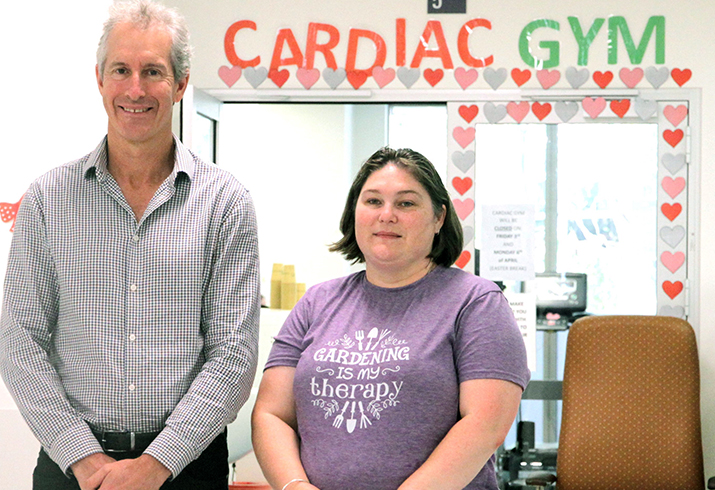
Professor Andrew Maiorana stands next to patient Sarah. Behind them on a wall are the words Cardiac Gym Professor Andrew Maiorana and Sarah after one of her treatment sessions
27/03/2026

For Sarah, who was born with congenital heart disease, support offered from others sharing the same condition has provided connection and comfort on her health journey.

Experiencing open-heart surgery twice as a child, and many other cardiac-related procedures including heart surgery in 2023, Sarah has since lived a full life, having six children and now two grandchildren.

“After the isolation experienced during COVID, I found there was a community of people online who shared a similar health journey to me,” Sarah said.

“Connecting with others who also had heart disease offered unique support from someone who was walking in my same shoes.”

Sarah then came across a randomised controlled trial at Fiona Stanley Hospital called Heart2Heart. The new research will test whether a digital peer support program can help people with heart disease to better manage their condition by feeling more socially connected.

Designed with input from people living with heart disease, the study includes the Heart2Heart app (exernal site) which has:

  • online group chats for peers who have lived experience of heart disease
  • educational resources about heart health and healthy lifestyle
  • moderation by health professionals to keep the space safe and supportive.

Head of Department, Exercise Physiology, Professor Andrew Maiorana, a co-investigator in the project, said the research was motivated by the loneliness and social isolation many people with heart disease reported after their discharge from hospital.

“While medical and clinical care is important, emotional support and a sense of connection like Sarah experienced can make a big difference to recovery,” Andrew said.

“This research program was developed to see if digital peer support can be an easy, affordable and effective way to help people with heart disease feel more socially connected and supported during cardiac recovery.”

The hospital is one of several cardiac rehabilitation sites across the nation where Heart2Heart is taking place, alongside other sites in Western Australia, New South Wales, and Victoria. Online recruitment also allows any adult across Australia with a confirmed diagnosis of heart disease to participate.

“Participants are randomly placed into either the intervention group who get access to the Heart2Heart app (external site) for six months, or the control group who receive their usual care, but will be offered the app after 12 months,” Andrew said.

“Follow up at 6 and 12 months determines how the program affects participants social connection, lifestyle, self-efficacy, health-related quality of life, hospital readmission, health service use and satisfaction.

“The research gathers clinical and patient-reported outcomes and experience measures, with findings aiming to improve outcomes for patients with heart disease,” Andrew said.

Funded by the Australian Government’s Medical Research Future Fund (MRFF) and the NSW Office of Health and Medical Research, this research project had ethical clearance from Western Sydney Local Health District Ethics Committee. The research is conducted in collaboration with Primary Investigator Professor Julie Redfern from Bond University, as well as an extensive multidisciplinary group of associated investigators from many other institutions and is likely to be completed in 2026.

Keep up to date with our news and achievements

Find out more on Facebook (external site) or LinkedIn (external site)

Previous Next
Last Updated: 27/03/2026
  • Facebook
  • LinkedIn

Footer menu

  • wa.gov.au
  • Copyright
  • Disclaimer
  • Privacy
  • Sitemap
  • Contact Us

Brought to you by the Department of Health, Western Australia

© Government of Western Australia 2018 to