

Study of AI to detect heart attacks in the FSH Emergency Department
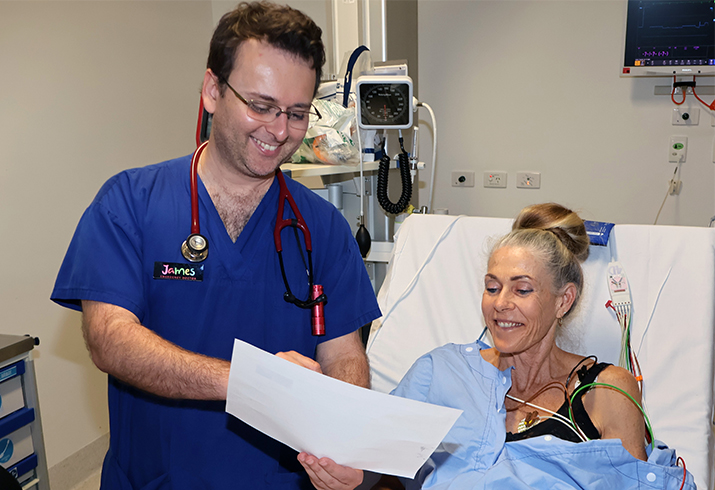 Emergency doctor James interprets the ECG of patient Carolyn
Carolyn of Kardinya recently found herself in the Fiona Stanley Hospital (FSH) Emergency Department (ED) after experiencing chest pain.
“The care I received in the ED was thorough and efficient,” Carolyn said.
A crucial part of the assessment of patients presenting with chest pain is the interpretation of a heart trace, known formally as an electrocardiogram (ECG).
Patients like Carolyn currently have their ECG interpreted in the conventional way by highly trained clinicians. Depending on the outcomes of an innovative retrospective study being undertaken in FSH ED, one day clinicians may be assisted in their interpretation by artificial intelligence (AI).
Consultant Emergency Physician Dr Simone Bartlett said this retrospective study will explore the impact of AI ECG interpretation on detecting occlusive myocardial infarction, or blocked heart arteries.
“Using AI with clinician oversight to detect occlusive myocardial infarction via ECG may reduce unnecessary interventional procedures for patients, such as attending the cath lab, and allow for a quicker diagnosis,” Dr Bartlett said.
This study has been showcased recently in the inaugural FSH ED Research Week, which aimed to recognise the achievements of ED staff involved in research projects and coincided with the release of the 2024–25 FSH ED Research Report.
Congratulations to the FSH ED for their innovative research contributing to the ongoing provision of high-quality care.
Keep up to date with our news and achievements
Find out more on Facebook (external site) or LinkedIn (external site)