

The sound of Christmas
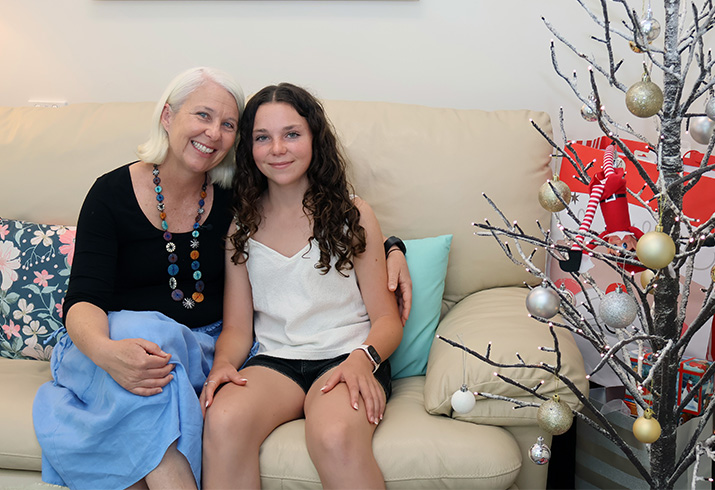 Abby Ralston (right) and her mum Annika
There are so many sounds we’ve come to associate with the magic of Christmas.
Carol singers, presents being unwrapped, the general hubbub of family coming together and the popping of Christmas crackers over a cooked lunch.
For 14-year-old Abby Ralston, these sounds have always been muted.
“Ever since I was little it’s been very hard to understand people, I just pretended that I could hear,” Abby said.
“I’ve always found it hard to hear other sounds when it’s really noisy and I’ve struggled to join in conversations when people are talking.”
While Abby was born with what was considered to be normal hearing, by the age of 2 she was struggling with language. She had grommets put in her ears which fell out and by Year 3 she had hearing aids after it was discovered she had mild to moderate hearing loss.
“By the end of her first year of high school we noticed her hearing was really declining, despite having the hearing aids, and she was mainly lip reading which really impacted her friendships,” mum Annika Ralston said.
“We were referred to the Audiology Service at Fiona Stanley Hospital (FSH) for a cochlear implant assessment, and it was then that Abby failed the speech test and we found out she had less than 5 per cent hearing in each ear.
“Understandably Abby has always tried to hide her hearing loss, especially in her younger years, and she’s worked really hard to compensate for it. Throughout her entire childhood, she’s never used it as an excuse to hold her back.
“Against all the odds, Abby continued to work hard to try and hear all day every day, but she was becoming increasingly mentally exhausted and needed a lot of sleep.”
Living in Cowaramup, Abby came to the statewide Audiology Service at Fiona Stanely Hospital (FSH) via referral once it was deemed her hearing aids weren’t providing any functional benefit.
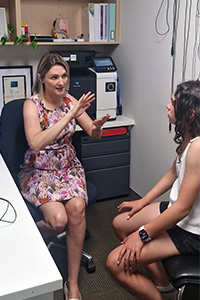
"Once all the results were finalised, her case was discussed at a multidisciplinary team meeting, where Abby was deemed suitable for a cochlear implant due to the progressive nature of her hearing loss," Karin said.
“Given Abby’s young age, her brain’s neuroplasticity would allow her to adapt to the cochlear implant in a short period of time. This in turn would give her access to all speech sounds that will not only help improve her speech and language development, but also her speech clarity.
“As a statewide audiology service, we work in a multi-disciplinary space and are constantly looking at all aspects of a patient’s life – their social interactions, education or vocation and family support.
“We always look at the patient as a whole to improve quality of life which includes their peer groups, family and community.”
Now more than ever is when we see family and community come together – at Christmas time.
With her cochlear implant officially “switched on” earlier this month, Abby is ready to hear all the sounds that come with the festive season.
“It’s a huge transition for Abby as she will be more aware of all the new sounds, there will be lots of ‘firsts’ for her this Christmas,” Annika said.
“While it was a bit overwhelming hearing all these high-pitched noises to start with, it’s now getting easier to hear,” Abby said.
“I’m excited to be able to open the Christmas bon bons and say the jokes aloud and laugh along with my family – every year I would just read them to myself and only laughed because everyone else did.”
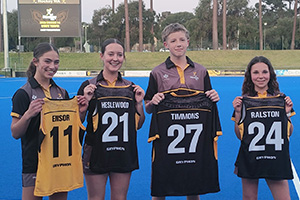
“While at training and during games, I’ll be able to hear our coach and have the chance to communicate with my team mates on the pitch.
“I really want to get a casual job in town where I can serve customers and communicate with them to answer their questions. I’m also looking forward to returning to school next year as I’ll be able to participate in group projects for the first time and share my ideas rather than let everyone else take over.”
“Abby has never known life any other way – she’s never considered her hearing loss as an impediment. She’s always just said that her journey is different and has really pushed herself to succeed,” Annika said.
“I’m thrilled that she now has all the opportunities like other kids her age which includes a range of friendships, employment options and of course her sporting commitments.”
“The world really is her oyster now!”
Watch the Channel 9 news coverage below
Keep up to date with our news and achievements
Find out more on Facebook (external site) or LinkedIn (external site)